Home

Meet The Teacher

Class Information

Registration

Tuition

Schedule

Curriculum

Philosophy

Contact Me

Songs

Showing posts with label Tip of the Month. Show all posts

Tuesday, September 12, 2017

First Week! Practice Makes Perfect

We had such a fun first week back at school. I am really excited for this year because these kids are not only adorable, but they are so much fun to work with. I have already been impressed with their ability to listen and apply what we are talking about to what they are doing. They are amazing at receiving feedback in a constructive way. And I must say that these 3 year olds seem to be naturals at using scissors! I had some of them cutting on lines today and they could actually do it! Hubba wha? (Can you name the Mo Willems books that came from? Hint: it involves a duck and a chick. ;) ) For those of you who have worked with kids learning how to use scissors, you know that this is not a normal second time using scissors experience! Pretty dang awesome. Here are some fun pictures of the kids working together using a puzzle and a parachute. 
In our first week of school we spent the first day getting into a routine and discussing what it means to have good manners at preschool. The second day we talked about what it means to work together. We each got a few pieces of an extra big puzzle that we worked on together to complete. We also played some parachute games together which takes listening and team work to make the game work. 
Three year olds are notoriously self centered. When they start school it is a big shift for them that there are other students and the teacher who they have to consider. Sometimes we don't want to share, but it is something that we do at preschool. Sometimes someone takes something that we were using and we have to learn to use our words to ask for it back without hitting or yelling. Sometimes the teacher asks us to come work at the table when we really want to keep playing blocks. All these situations and many more make preschool a pretty complex place to be. My job is to help them learn how to navigate those complex situations so they can learn good manners and team work while they are at school. 
My favorite skill for teaching this is practice. "Try again" are the two most important words you can use to help your children learn good manners. You will often hear these words in our house and in my classroom. Forget to say please? "Try again." If a child whines or back talks, "try again." If a kid does a chore or an assignment lazily, "try again." If they talk meanly to others, we "try again." If we make a mistake we practice doing it differently through role play or sometimes redoing an assignment. My amazing husband has helped me understand that the classroom and the home are the best places to make mistakes because mistakes are how we learn and grow. He has a sign in his classroom that says. "Whoever does the work, does the learning." So my goal is that we will work hard on having good manners, understanding how to follow directions, and learning skills that will help us be our most awesome selves so we can do all the learning!

Wednesday, February 1, 2017

E is for Emotions


When you work with children you aren't just teaching them academics. You are helping them learn how to be a human being that is part of a community. For my kids, our community is our classroom and hopefully the things they are learning in class will go with them out into the world.
     Talking about emotions is kind of a big deal with 3, 4, and 5 year olds. It's pretty obvious that controlling emotions isn't necessarily their strong suit and that's where we come in. When talking to little ones about emotions there are some important truths to help them understand.


1. Feeling emotions is totally normal. Everyone feels sad sometimes, everyone feels angry sometimes, it is normal.
2. Recognizing how you are feeling is a huge deal. As adults, we can teach our kids empathy when we help them see that we recognize how they are feeling and help them through it. My son Brandon was crying during carpet time. So we stopped to talk about it as a class. Why are you crying? "We put away his blocks when it was time to clean up and he wasn't done." Did you know we would clean up even if he wasn't done? "Yes" I asked the other kids, what are things you do when you are feeling sad to cheer yourself up? Madden sang a cute song about taking 4 deep breaths. Jaxon said he goes to his room to cry and then comes out to play when he's done. I said I like to get hugs or sometimes listen to music. Then we asked Brandon if he has a favorite song we could sing to cheer him up. So we rocked out to Dr. Jean's "Bear Hunt" and he felt better.
2. What we do when we are feeling those emotions is important. Yes we feel angry, but is hitting someone okay? Nope. Is there something you can do to help you calm down? Take deep breaths, run around outside, kick a soccer ball outside, talk to a friend . . . This is our job, to give them tools to keep in their tool belt that they can pull out when they are struggling.
      One of my kids especially struggles with keeping her emotions in check. So we have worked on putting tools her tool belt.  When she is upset I can use key words to talk to her about choosing a strategy to help her through those hard times. Here's what we talk about - balloon breaths (breath in deep, puff out your cheeks and blow the air out slowly like you are blowing up a balloon), belly breaths (breathing deeply and slowly so your belly goes in and out - in the nose and out the mouth), get a hug (it's usually a pretty long hug), lay in bed and snuggle your favorite stuffed animal, put on headphones and listen to music (we have a kid friendly mp3 player with a playlist on it of their favorite, appropriate songs. This one is HUGE for kids who can get out of control. On a side note, this also helps get them going on doing their chores too), are we being flexible, are we trusting mom that everything will be okay, or read a book. It's not perfect and we have been working on it for years, adding new strategies to fit her age, but it has helped improve the melt downs and stress.

  We spent some time in class talking about emotions. We discussed what emotions are. We listed different kinds of emotions. We read Today I Feel Silly by Jamie Lee Curtis.
Image result for today i feel silly

Then we used my new favorite activity to explore emotions more deeply. I found this amazing make a face toy at Mr.Printables.com. We took turns making our face show different emotions. First I made a few faces and the kids talked about what emotion they are seeing. Then, we had two friends come up. One friend made a face and the other friend changed the paper face to match. It was really fun and a really great way to explore our emotions.
He couldn't quite do mad without smiling. 
You should definitely give it a try. It might just be so much fun that you find a single tear of joy rolling down your face. Have a great afternoon! 


Wednesday, January 18, 2017

Truth


Saturday, October 8, 2016

Frugal Fun - Tip of the Month

 As the weather is turning colder and more wintry, Saturdays can sometimes rough to know what to do with your kids. It isn't as easy to say, "Go play outside!" 

One thing that my kids and I love to do is the free kids workshops at our local hardware stores. We have tried them at Home Depot and Lowes. They are usually offered once a month on the same Saturday each month. They often relate to upcoming holidays. I don't know if they do the same one nation wide, but you should check it out!
Workshop image
November's project at Home Depot is this Veteran's day helicopter.

Each workshop provides your child with an apron, a wooden project, a pin for that project and a space to work. Each project is usually assembled with nails, glue, and a hammer and even the littlest toddler can complete it with help from mom and dad. They sometimes provide paint or specialized stickers to decorate your project. 

Lowes requires that you preregister and from our experience, Home Depot is on a walk in basis.

I don't know about your house, but my kids are almost never allowed to use a hammer at home so these workshops are a big deal for them because they really get into that DIY spirit. 

So go check out if your local store offers this fun opportunity. 


Sunday, August 21, 2016

Learn to Love Learning

It's probably no surprise to you that I believe learning is crazy important. It probably shows in the fact that I'm a teacher and my husband is a teacher and we both seriously love our jobs. In fact a lot of our date night conversations revolve around teaching philosophies and current educational trends.  
We're cool like that. ;)  


What some of you may not know is that I'm a pretty religious person. I belong to the Church of Jesus Christ of Latter-day Saints. People know us mostly as Mormons. One thing that we believe is that there are living prophets on the earth. I found this quote from one of the apostles and I felt like I couldn't not share it because it really expresses how I feel about learning.


I believe that learning is an eternal process and that we continue to learn even when we aren't in school. Here are some things I have learned since I have graduated college: how to set up a preschool classroom & curriculum, how to do cool braids and hairstyles, how to sew Halloween costumes, how to (try) to keep a house clean (I am super serious about how much it took to learn how to do this. It took me a long, long, long time of working, trying, failing, and trying something new before I even started to make a dent in the housework), how to refinish furniture, how to take out a dead tree (I've done 3), and how to bake a potato (this was a skill that eluded me until about a year ago. You can ask my husband, I was pretty bad at it.)
Here are some things I still want to learn before I die: how to arrange flowers, how to garden, how to put up drywall, how to decorate cakes, and how to make a killer pie crust. We'll throw get a masters degree in there but I don't know what I want my focus to be yet so it's still undecided.

I hope that these words can inspire you to continue helping your sweet little ones to learn, but also to light a fire under you too. Just because we are done with school, doesn't mean we should stop learning. Learning to love learning is an important skill to achieve in this life.

Monday, August 1, 2016

Top Ten Back to School Books

 A great way to help your kids get ready for back to school is to talk about what they can expect before they go. Books are a great way to help them see what school might be like. It helps them see that other people get nervous about starting school too. It helps them see that it will be a safe place where they will have fun and learn. 

Here is a count down to our top ten favorite back to school books for young kids. 


10. School Bus by Donald Crews
The vivid pictures and simple phrases in this book give it an irresistible charm. It shows school buses big and little as they pick up their passengers. Many young kids don't ride the bus to school, but the school bus is an iconic symbol of starting school.

9. Little Piggy's Book of Manners by Kathryn Madeline Allen
It is always good to help remind our kids how to have good manners at home and at school. This book is a fun way to look at what to do and what not to do. It compares good little piggies with bad little piggies to help kids learn what to do. If you want a great lesson plan to go with it, check out our post from a while back. p-is-for-polite-pig.

8. Curious George's First Day of School by Margret and H.A. Rey's
Curious George is up to his old tricks, making mischief as he tries to figure out how to manage the interesting temptations at school.

7. Chrysanthemum by Kevin Henkes
Chrysanthemum is so excited for school until she gets there and starts to feel different from the other kids. She starts to "wilt" until a charismatic teacher helps her "bloom." This is a great read to discuss how sometimes we feel different, but we are still beautiful in our own unique way.

6. The Night Before Preschool by Natasha Wing
Following the traditional rhyme, this book outlines what it will be like getting ready for school and what the school day will look like.

 5. Franklin Goes to School by Paulette Bourgeois and Brenda Clark
Franklin has flies in his tummy as he gets ready for his first day of school. All the other kids seem to know so much and he feels like he doesn't know anything. When he gets there he realizes he knows more than he thought.

4. The Kissing Hand by Audrey Penn
Mom knows how hard it can be to leave and go to school so she gives raccoon a special gift to help him through his first day. A sweet story that can create a first day tradition for any family.

3. Wemberly Worried by Kevin Henkes
This book is amazing for helping kids who are feeling really worried about school. Wemberly worries about a lot of things and especially starting a new school, but in the end she realizes that there is nothing to worry about.

2. How Do Dinosaurs Go to School? by Jane Yolen and Mark Teague
What kid doesn't love reading dinosaur books? The fun rhythmic words take kids through a comparison of what bad and good dinosaurs do at school. 

1. First Day Jitters by Julie Danneberg
Kids aren't the only ones who can be nervous about the first day. The surprise ending makes it my all time favorite first day book.  


Tuesday, July 12, 2016

"A Lesson in Cheering Yourself Up"


 I'm sure you've seen these calm down jars floating around the internet. They are mesmerizing. They can be a great tool in helping kids learn about regulating their emotions and taking time to be calm when they are feeling upset. 

We decided to try them out and as we were working, I realized that I have never shared one of my most favorite books on here. I seriously can't believe I haven't shared this book and I literally have butterflies in my stomach because I am so excited to tell you about it. One of my third graders got this book for me from the book fair when I was teaching 3rd grade and it is the best. Okay, are you ready? Eek, I'm stoked. Okay here it is:

The Blue Day Book for Kids by Bradley Trevor Greive

The book goes through what it might feel like to have a rough day and uses the most incredible animal pictures that are sweet, funny, and touching all at the same time. For example:

And then it invites the readers to turn a blue day into a new day and offer strategies for cheering yourself up. Like:

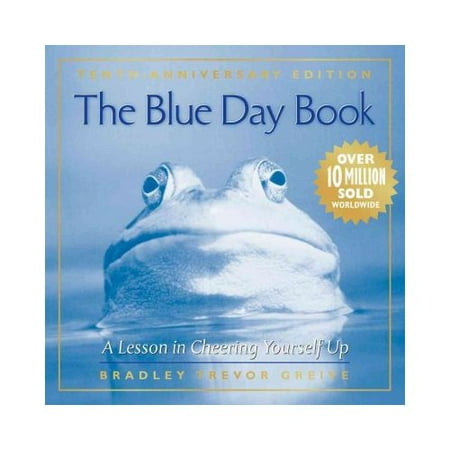
Another fun thing about this book? There's a grown up version too! The Blue Day Book: A Lesson in Cheering Yourself Up
So, you have to go check out this book ( maybe the one for adults too) and after you read it with one of the little people that you love, maybe hop over to Momma Owl's Lab for instructions on how to make a calming down jar. The thing that makes her site better than all the rest is that she tells you about the science behind it at the bottom and that is beyond cool. So make sure to read that part too. 

Okay. You totally have to tell me what you think of the book. Isn't it the best?!


Have an amazing summer and I may or may not see you again before the fall. ;)

Friday, May 13, 2016

Passionate Thoughts about Current Preschool Education Trends

 
I don't always get soap boxy, but I feel so very strongly about this issue. I was recently reading an article that describes how "twisted" early childhood education has become. Preschools have increasingly moved away from what is appropriate for children that age. Preschools are including more and more desk work and drill in order to help kids "prepare" for kindergarten and they are taking out the essential hands on, sensory, play based learning. It is not what children that age need. It is depriving them of important development. Studies of brain development support the need for active learning and many preschool classrooms are depriving them of that opportunity. Here's a quote from the article.

"So never in my wildest dreams could I have foreseen the situation we find ourselves in today.
Where education policies that do not reflect what we know about how young children learn could be mandated and followed. We have decades of research in child development and neuroscience that tell us that young children learn actively — they have to move, use their senses, get their hands on things, interact with other kids and teachers, create, invent. But in this twisted time, young children starting public pre-K at the age of 4 are expected to learn through “rigorous instruction.”
And never in my wildest dreams could I have imagined that we would have to defend children’s right to play."
This is why I teach the way I do and why I have chosen not to put my kids in other classrooms. "Play is the primary engine of human growth."
Preschool should be fun and full of play. Your children will have 13 years of sitting at a desk, doing worksheets, and being still for hours on end. When considering where your child should go to preschool, don't deprive them of some of the last moments they might have to learn about the world through exploration.
Please take a minute to read this article and consider carefully where your child attends preschool. Don't enroll them in a classroom that doesn't take your child's right to play seriously.

Tuesday, April 26, 2016

Helping Children Handle Fears

            Fear is a basic human emotion necessary for self-preservation and survival. However, fears and anxiety can interfere with a child’s growth and happiness. The following are suggested ways for parents to help.

  •  Encourage Questions: To the child the unknown is always fearful. Questions are a child’s method of feeling secure through knowledge.
  •  Talk Over Disturbing Events: Re-living the event through words, or playing it out, helps the child assimilate an anxiety that might otherwise be suppressed.
  • Avoid Re-exposing a Child to Fear: A child’s fear cannot be undone by exposing him or her to the same frightening circumstances again. A child should have reassurance and relief after a scare. He can more easily face another fright if he has a memory of relief from the first. 
  • Avoid Shaming: Shaming only adds insult to injury. It makes the child feel weaker and less able to deal with his fears. Shaming may cure the child of expressing fear, but the underlying anxiety will eventually be expressed in some other way (nightmares, tantrums, tension, stuttering, timidity, etc.)
  • Look for Underlying Causes: Anxieties change with time and events. If the basic cause is not discovered, the anxiety may worsen and it’s origin become lost.
  • Accept the Child’s Answers: Remember that understanding and kindness will be more effective than cross-examination. Sometimes the child truly does not know the cause of his anxiety.
  •  Get In Tune with Your Child: We can’t rear our children to be absolutely free of fear. We can help our children grow to maturity unburdened by destructive anxiety; free to become spontaneous and creative adults with a greater capacity to enjoy themselves and contribute to the happiness of others. 

Sunday, September 13, 2015

Changing our Mindset by Changing our Words

 I saw this amazing bulletin board on facebook, posted by Volunteer Spot. This idea has really been on my mind lately with changing the way we handle challenge. I wanted to remember it so I decided to post it here in my digital filing cabinet. :)


P.S. I plan on posting some new preschool stuff in the next couple of weeks. You know when life throws you curve balls and you go into survival mode and other things kind of get put on hold. We're kind of at that point right now, so please be patient. It doesn't help that one of those curve balls was that our camera broke. So blogging is challenging when you can't take pictures. Anyway, we will get through this and solve problems, and come back with some really fun ideas. Thanks for waiting.


Friday, July 10, 2015

Growth Theory

 I have been taking a few classes this summer to make my license current and have been learning some fun things. As one of my assignments I had to make a screen cast about something I learned in class. I was really excited to talk about the difference between fixed theory and growth theory. 

I used two books as references. They are both amazing. This first one is written for the general public and is amazing at helping you rethink how you take on challenges. The second is written for teachers and gives more specific strategies for engaging students in a classroom. 


We want students to have a growth mindset. Which means we want them to react positively to challenges and believe that they can learn and grow when something is hard. If you're interested in learning more about it, here's the screen cast I did. 

The first part is reviewing fixed and growth theory. The second part is the application - what we can do to foster growth theory. It's about 10 min long total. It gets a little technical, but it's a fascinating subject and can really apply to adults as well. It was a lot of fun to learn about these concepts (not so much fun listening to myself talk), but I am excited to use them in my classroom!

Part 1
http://screencast.com/t/fEbm89rfKrVY
Part 2

http://screencast.com/t/gPeh4Qg7K


Tuesday, May 13, 2014

Ending the School Year Successfully!

 The start of the school year is a big deal and so is the end of the year! Our favorite tradition for end of the year fun is going through old papers and art projects. We have a filing cabinet where each school aged child has a folder. When they bring something home that they worked extra hard on or is extra cute, it goes in the folder. At the end of the year we look through the folder together. They pick 3 things to keep and I pick 3 things to keep. Then we put them in a binder with their last report card and their class picture, along with any special awards or certificates from the year. Each year we add a new binder divider and the new papers so it's all in one place. It's a fun and easy way to keep school mementos without taking up a lot of space. What are your favorite end of the year traditions?

Here is some great information to think about as your kids finish school from the people at Family Do Dots. 
For more information about the Family Do Dot system, feel free to visit their website at http://familydodots.com. They have created a "chore chart" to end all charts. It is an all in one system that they describe perfectly. Here is what they say: "Imagine taking your chore charts, behavior charts, goals charts, etc. and simplifying them into one easy-to-use Family System.  DoDots does all of this and more to teach responsibility, independence, and motivation to your children."

Wednesday, July 25, 2012

Preparing for the First Day of School

Can you believe that the summer is almost over?! I know that some of you out there still have a month to go until the kids get back into the swing of things. But here in Arizona, we start school early. It might have something to do with the fact that by now our kids are getting a little restless because it's so hot that they can't go play outside. Whatever the reason, we are sharpening new pencils, loading up backpacks and stocking up on lunch foods.

Whether your child is starting preschool or elementary school, the first day can be a little scary for moms and kids alike. Here are some simple things that you can do to help ease the transition for your little one. 


Helping Prepare for the First Day
Some or all of these ideas might work for you and your family. Always remember to talk about starting school in a positive and calm way.

A few weeks before school starts:
*      Start talking about school starting and how much fun it will be.

*      Be positive and share with your child what they will do there.
*      Read books about children going to school.
*      If possible, meet the teacher and visit the class ahead of time.

That morning:
*      Leave plenty of time to get ready so you’re not rushed or stressed.
*      Reassure them that you will come and get them when it’s over.
*      Please do not bring toys.
*      If they need a security object, have them bring a book to share when it is reading time.

At school:
*      Engage your child in toys that interest them and talk about all the fun they will have.
*     Leave with a smile and a hug. 
If you show your confidence in their new experience by leaving with a smile, they will pick up on it and start to feel more confident as well.
*      When it is time for you to go, keep your goodbye short and simple.
This can be hard, especially if there are tears, but this can be really important for your child to learn that this is a normal thing. In time, they will learn that school is a safe place, but right they need to see from you that you know they will be happy there.
*      It can help to have a goodbye ritual like a special handshake, song, hug, or special words that you always say.
*      Allow the teacher to help your child or go to the teacher if they need help with a project or have questions. 
Helping them learn to get help from the teacher will show them that their teacher is someone they can trust.
*      Always keep open communication with the teacher about your concerns.
 

After School:
*      Talk about what they did at school that day. 
Sometimes it can be hard to get them to remember what they did. You can ask what they did during certain times of the day. i.e. Math, reading, P.E. carpet time, etc. Or you can just ask them to share 3 things about their day and take whatever they give you. I still do this with my 3rd grader. Some days I get who she played with at recess, what she ate for lunch and where they went for specials. Some days she shares with me more details about her thoughts or what she is learning. Whatever she shares, I take it and know that some days I'll get more information than others.
*      Ask them to tell you about the stories they read or the songs they sung.